

A place is made, not found
1869

Donald McKay stands in a black top hat
before the launch of his final clipper
ship, Glory of the Seas. It is the
culmination of a life’s work—and a
threshold between eras.
That same year, the Transcontinental
Railroad was completed and the Suez
Canal opened, reshaping how people
and goods moved around the world.
Even as Glory of the Seas entered the
water, the clipper era that had made
McKay famous was beginning to pass.
For McKay—a Nova Scotian immigrant
who became one of history’s great
shipbuilders—the launch marked both
the culmination of an extraordinary
career and the closing of an age.
1928
Another man. Another hat. Another
ship. Here at Atlantic Works, the
Nantasket rests on Marine Railway
No. 2, whose remains are still
visible beneath the bridge.
By then, the work had changed.
Record-setting clippers had given
way to the repair and maintenance
of steam-powered vessels like this
forty-year-old ferry, which carried
passengers between Boston and
Nantasket Beach.
Yet the essential work endured:
skilled hands building, repairing,
and keeping the region moving.
A year later, the Nantasket was
destroyed by fire. Before 1929 was
over, the crash would mark the
beginning of the Great Depression.
Today
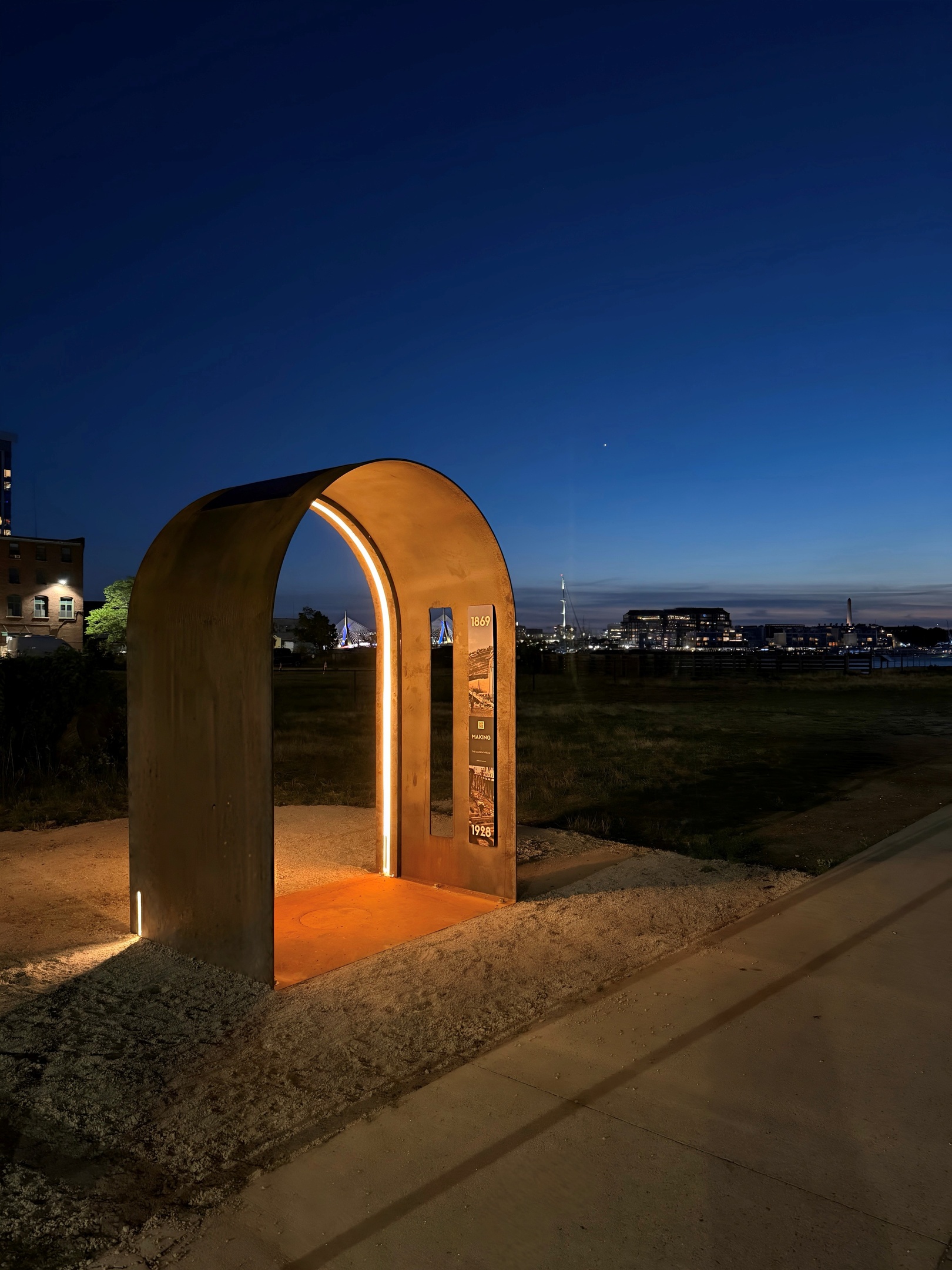
You stand on that same East Boston shoreline.
The threshold around you was fabricated nearby by
Blue Atlantic Fabricators, where skilled hands
continue Boston Harbor’s tradition of marine
work.
Donald McKay, the worker beside the Nantasket,
and the people who made this threshold belong to
different generations. Each encountered a place
between what was and what could be—and helped
shape what came next.
Your own thread now passes through this place,
facing the same harbor horizon between what was
and what will be.
Each generation helps shape what comes next.