

Connection is made, not found.
1868

The harbor connected East Boston to
the world. It also separated the
neighborhood from the rest of its
own city.
U.S. Army engineer John G. Foster
imagined a street beneath the water.
In this illustration from his
proposal, carriages pass below while
ships sail above. As Boston
considered a bridge, Foster offered
a way to connect the shores while
keeping the port unobstructed.
In 1904, the East Boston Tunnel
opened as the nation’s first
underwater subway tunnel. Today, it
carries the MBTA Blue Line.
1961
Nearly a century later, workers
stand inside the immense ribs of
the Callahan Tunnel being built.
The East Boston subway and the
Sumner road tunnels had transformed
how people crossed the harbor. As
trains filled and road traffic grew,
another generation was building a
new way across.
Their work now carries tens of
thousands of people across the
harbor every day.
Today
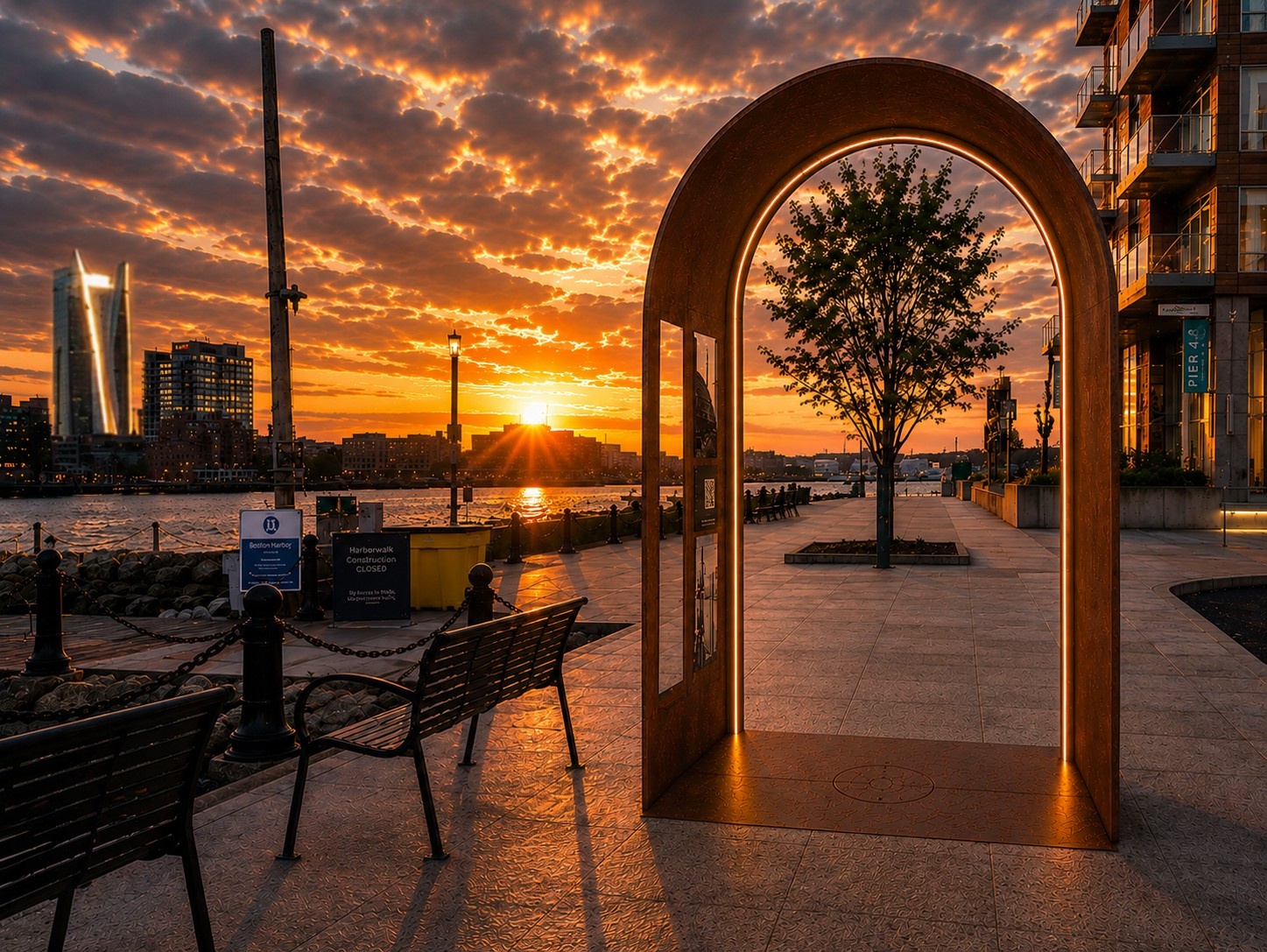
You stand at Lewis Mall Wharf, beside the ferry
dock. The Blue Line runs beneath this waterfront.
In 1995, the Ted Williams Tunnel opened another
route beneath the harbor to East Boston and Logan
Airport, the region’s gateway to the world.
The historic South Ferry served this waterfront
from the 1830s until 1952. In 2022, the MBTA East
Boston ferry carried that tradition forward, again
linking this wharf with downtown.
A boat across the water. A train beneath it.
A route to work, to family, to home.
Each generation has imagined and engineered new
and nearly miraculous ways to connect East Boston
with the world. We continue their work whenever we
build, repair, or improve a connection others
depend on.